




The tech case and the strategy case are both testable, they overlap at the point where setup decides which strategies are even available, and what is left sorts into configuration, integration and operability.
Sooner or later the same argument turns up. One side says the platform is holding things back. The other says the platform is fine and the problem is what you are doing with it.
Both sides feel right from where they are standing, and the useful part is that both are checkable in an afternoon. The tech case has a checklist behind it, and your stack either passes or it doesn't. The strategy case turns into a much shorter list than it sounds like, once you open the account and look.
Below: both arguments made properly, the two places they stop being separate, and how to work out which one you are holding.
Technical Requirements
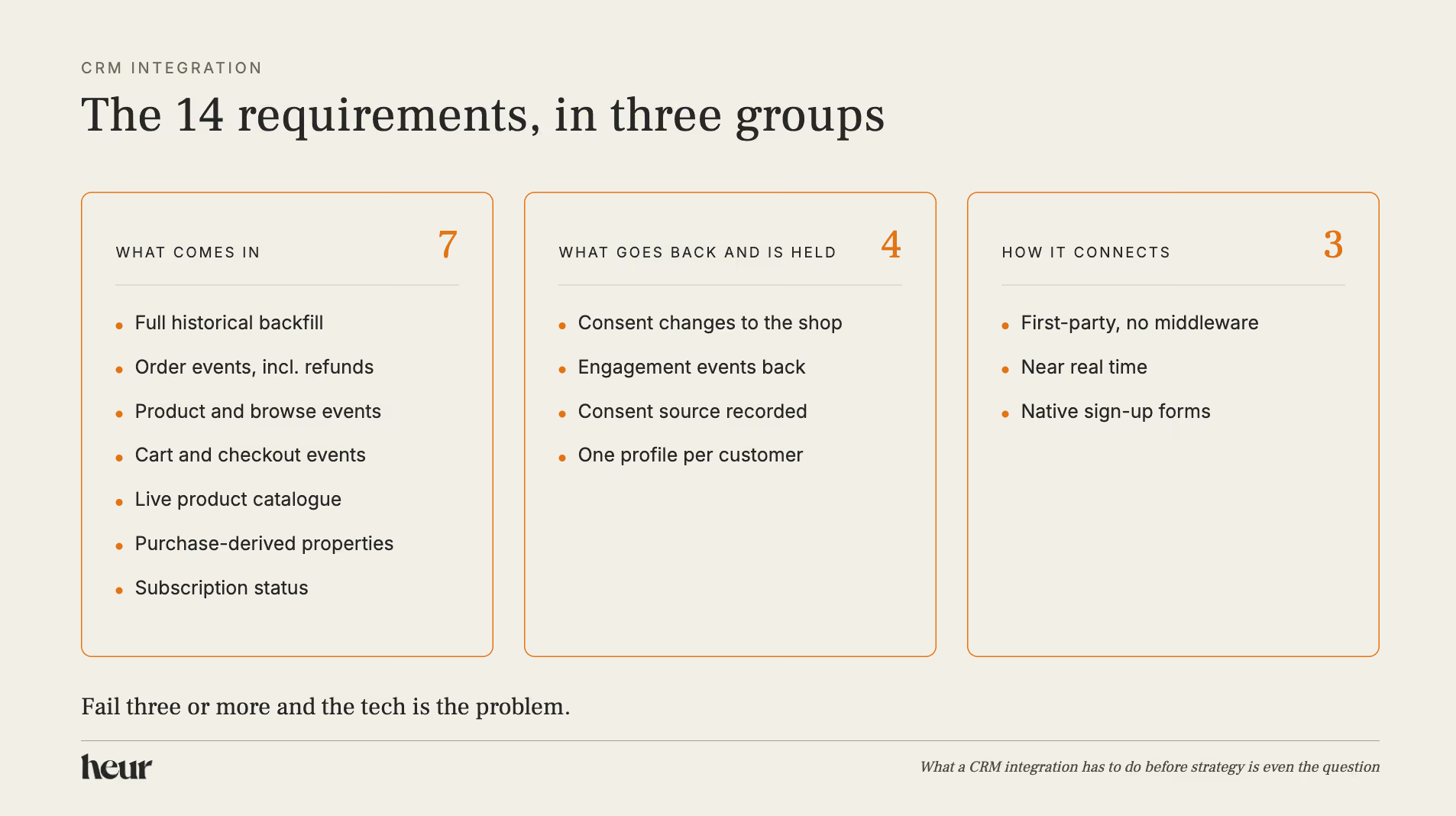
Fail even a handful of the fourteen requirements below, and your technology is the bottleneck. This isn't just an arbitrary threshold; because these points are structural dependencies, losing just three of these data pipelines means the automated flows that make retention work simply have nothing to fire on. A general-purpose email tool bolted to a shop through a third-party connector usually fails the connection rows and most of the event rows. No amount of better strategy survives that, so fix the plumbing first and come back to the rest of this afterwards.
Those limits also date quickly, so check rather than assume. Mailchimp and Shopify parted company in 2019 over a customer data dispute, and merchants spent about two and a half years reaching Mailchimp through third-party software. Mailchimp later acquired one of those third parties, ShopSync, to power a first-party app and signed a fresh data-processing agreement alongside it. Pages selling alternatives still tell you today that no official integration exists.
Shopify and Klaviyo clear the list. That is less common at SME level than it sounds. Klaviyo's documentation covers syncing profiles, custom properties and subscription status back into Shopify, where subscribes and unsubscribes trigger matching updates in the shop and custom properties arrive as Shopify metafields.
Two things in that setup still catch people out.
- Suppression in Klaviyo does not reach Shopify. Stop emailing somebody in Klaviyo and Shopify still has them as subscribed, so the two systems disagree about who you may contact.
- A custom property sent back in the wrong data type fails silently. If the Shopify field was created expecting one format and Klaviyo sends another, nothing updates and nothing tells you.
Neither of those sinks the pairing, and both land on the consent row, so treat that row as cleared with two known edges rather than cleared outright.
So the tech case is specific and testable. In the SME Shopify accounts we open it almost always comes back clean, and it is worth saying so plainly. We run this list expecting to rule the tech out. It earns its place because ruling it out takes an afternoon, where arguing about it takes a quarter.
What if it's the strategy
The other side of the argument is that the tools are fine and the thinking is thin, and that case holds too, though it is usually made far too vaguely for anybody to act on.
Ask what strategy means once you are inside an account and it turns into four things: which properties you collect at signup, which segments exist, what triggers each flow, and who is allowed to build one. Every strategic decision anybody has made about this channel is sitting in those four places, whether or not anybody meant to decide it.
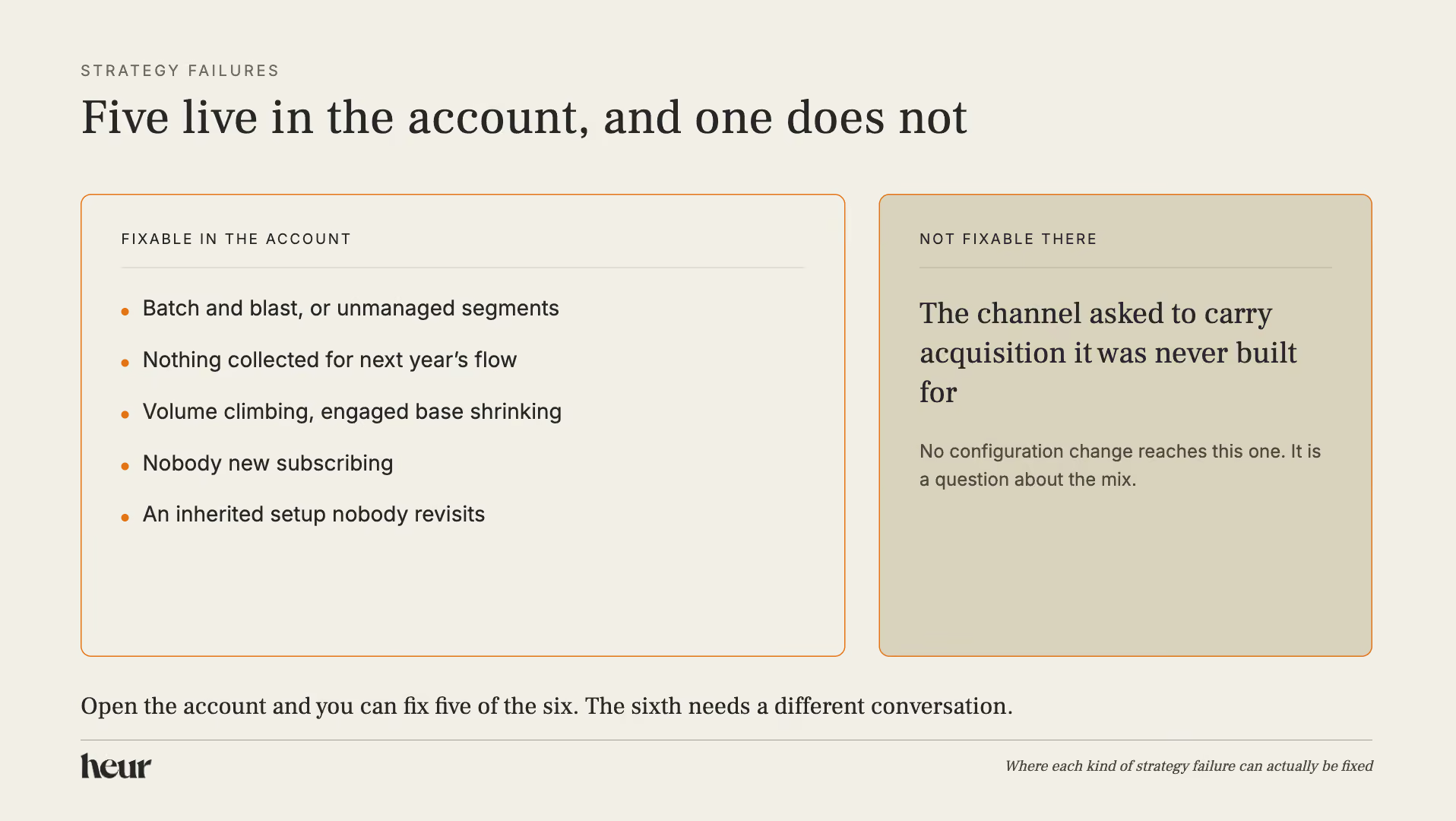
Which is why the strategy case, when you look at it closely, usually resolves into a list of specifics:
- Batch and blast, or segments nobody manages. Everything goes to everyone, or the segments exist and nobody has looked at them since the day they were built, so every performance figure is an average of people who wanted the email and people who didn't.
- Nothing collected for next year's flow. The property you will need in twelve months is not being captured now, and nobody has mapped the flows you want against the data you gather.
- Volume climbing while the engaged base shrinks. Sends go up to hold the revenue line, which works for a while and then stops working all at once.
- Nobody new subscribing. Every retention question underneath this one is unanswerable, and no flow will sign anybody up for you.
- Doing it the way it has always been done. The setup made sense for the business three years ago and nobody has revisited it since, which is usually why the first item on this list is still true.
The first one comes up more than the other four together. Batch and blast, or segmentation built once and left alone, is the failure we find most, and it is the one people are most likely to describe as a strategy problem when it is a Tuesday afternoon of work.
Because that is what these are. They get called strategy problems in meetings, and each one is a decision that already exists in the account.
Most of them were also decided once, by whoever was in the seat at the time, at a revenue the business has long since passed. Setups get inherited. A founder builds the first welcome flow, or an agency does, and then somebody new arrives and reasonably assumes the parts that appear to be working were thought about. Three years on, nobody in the building has decided anything about this channel, and everybody believes somebody did. Nothing about it looks broken, which is why it hides better than any of the others.
Not every strategy failure is a setting, though, and the largest one isn't.
Brands arrive expecting the database itself to be the breakout. Grow the list far enough and the revenue arrives behind it. Outside subscription businesses that almost never happens, because email and SMS convert demand that already exists instead of manufacturing it from nothing. Ask the channel to carry acquisition economics it was never built for and it will miss the plan however well it is built. No configuration change touches that, because the error is in what the channel was expected to do inside the wider mix.
Separate that one from the rest when you find it. It is the only case here where fixing the account changes nothing at all, and it needs a conversation about the mix rather than a conversation about Klaviyo.
The setup decides which strategies are available
Here is where the two cases stop being separate. Every row above is a door, and a strategy you cannot open the door for is not a strategy you have.
Read that table twice if you have ever been told your lifecycle plan is unambitious. The plan may be fine. The account may simply have nowhere to put it.
It runs the other way too, and there is a clean example of how.
Klaviyo's documentation lists birthday, anniversary, appointment, subscription date and reorder among the things a date can trigger, then explains why the one you want might be missing from the menu: the property has not been set on a single profile, or the dates sit in a format it will not accept. A date saved as text does not appear as an option at all.
Picture that from the seat of whoever is building it. They open the trigger list, the property is not there, and they report back that Klaviyo cannot run anniversary emails. That arrives in the meeting as a tech problem. It is a data collection decision made at signup, which is a strategy problem, showing up as a missing option in a menu.
The same thing happens in reverse. A team told their strategy is weak goes away and writes a better plan, then discovers the plan needs a property nobody has been collecting for two years.
Collecting for the channel you don't run yet
The most expensive data decisions are about information you have no use for today.
Every property gets collected at a moment you control, once, and there is rarely a way back for it afterwards. A brand deciding eighteen months from now to run SMS finds that the numbers were never asked for, or were asked for without the consent that makes them usable. Klaviyo's documentation is blunt about what that costs: SMS consent only syncs across when somebody subscribes in Shopify for the first time, and historic SMS subscribers have to be brought in through a separate manual process.
So the question to ask of any signup form, checkout setting or preference centre is what you would need it to have captured by the time you want the next thing. That is a longer horizon than most forms are built against.
None of this costs much at the point of collection. All of it is expensive to reconstruct and some of it cannot be reconstructed at all, which is the argument for treating collection as a strategic decision with a two-year horizon on it.
Sorting which one you have
Three causes, and from inside the business all three sound identical.
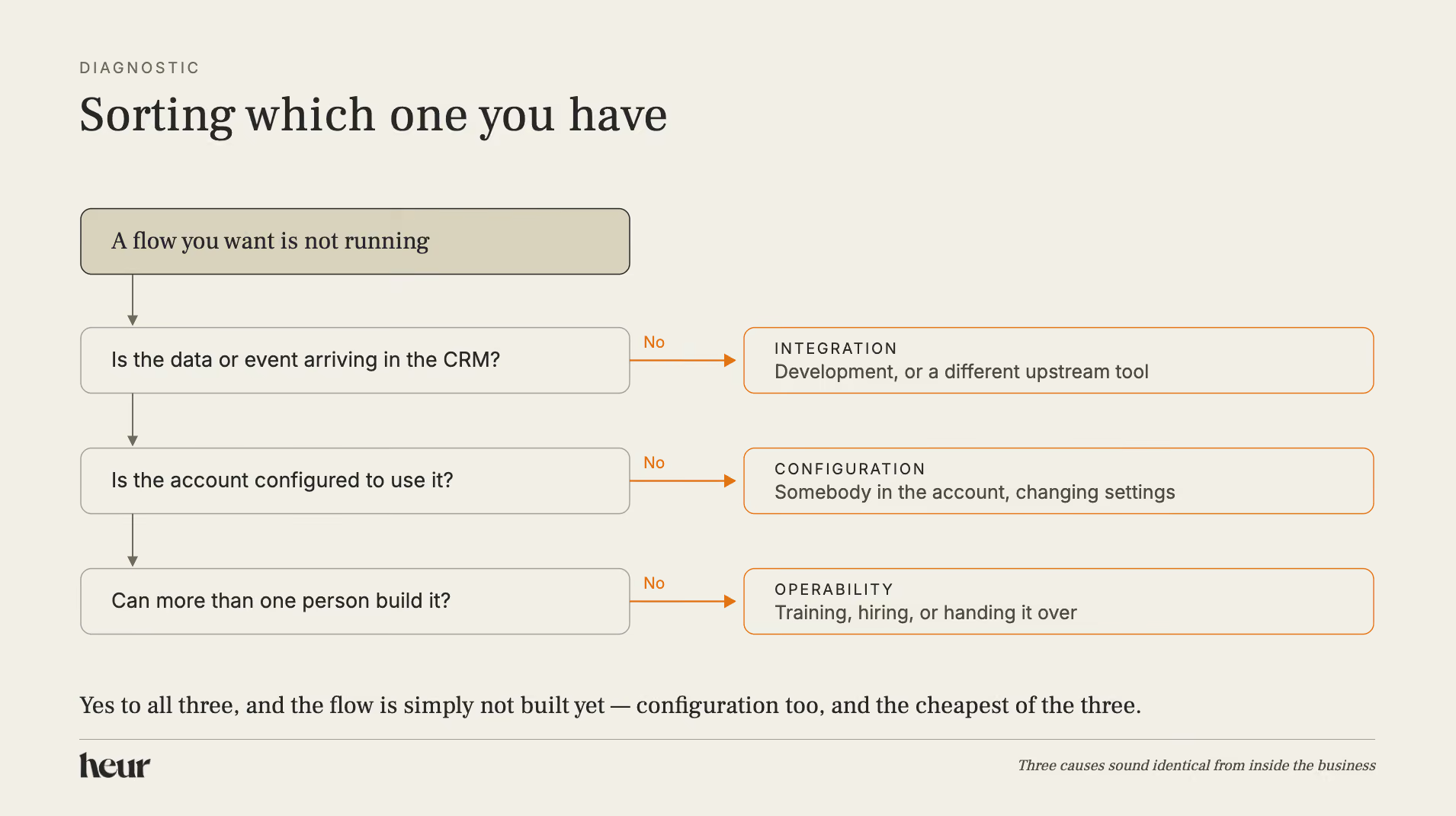
Operability is the one nobody names, and on a deep platform it comes from the range of what the thing can do. One person learns where everything is, becomes the only person who can build a segment, and the channel starts running at the speed of that person's calendar. Klaviyo adds small frictions that push the same way: a date property trigger cannot be edited once configured, and changing it means cloning the flow. Nothing to somebody fluent, quietly discouraging to everybody else.
Gartner argues for the same order of operations from a far larger sample, putting only 49% of tools in active use and complexity at the top of its adoption barriers and recommending an audit of what you have before evaluating anything new. Those are much bigger organisations than yours, so the number is theirs. The sequencing is the part that transfers.
The trade you are making
On the Shopify and Klaviyo accounts we open, the answer is usually configuration, which is the least exciting outcome available, because configuration work is unglamorous, comes with no onboarding call, and gives nobody anything to announce. A team hoping for a new tool will find this disappointing, and we would rather say so than sell the check as painless.
Worth saying plainly where that verdict comes from. We only run Klaviyo, and account work is what we sell, so we are not a neutral party on the question of what the answer usually turns out to be. The checklist below is the whole first pass anyway, given away, because a brand that runs it and fixes its own setup was never going to need us.
It has to end in a decision, including on the columns you are leaving alone this quarter. Write those down. An unwritten "not yet" becomes a permanent no, and a year later you have the same conversation with slightly better open rates.
Questions we get asked
Is it my email platform or my strategy?
Test the platform first, because it is faster. Work through the 14 requirements above. Pass them and the tech case is weak, so the answer is in your settings. Fail three or more and your problem is in the plumbing.
Why isn't Klaviyo working for us?
Usually the account was never configured to do the thing you are expecting. Sort your complaints into configuration, integration and operability before spending anything, since each needs a different response and two of them will absorb account work without moving.
We migrated to Klaviyo and nothing changed. Why?
Configuration comes with you. A migration moves lists, templates and habits onto stronger software, and a thin setup will be thin again within a quarter. Rebuilding what triggers what is the intervention. The new platform makes that rebuild easier, and nothing more.
Why can't I find my date property when building a birthday flow?
Klaviyo's documentation answers this directly: either no profile carries that property yet, or the dates are stored in a format it doesn't recognise, including anything saved as text. Add it to a test profile in an accepted format and it appears in the trigger list.
Should we collect phone numbers before we run SMS?
Yes, with proper SMS consent at signup and checkout. Klaviyo's documentation notes that SMS consent only syncs from Shopify on a first subscribe, and historic subscribers need a manual process, so a number collected without consent today is remedial work rather than an asset later.
What to do this week
- Test your integration against the 14 requirements. Three or more failures and you have your answer already.
- Count segments against lists. If nearly every send goes to a whole list, you have found your first job.
- Write down every flow you believe you cannot build, then find each trigger in Klaviyo's current documentation.
- Check both traps above: suppression against Shopify consent, and custom properties that stopped updating.
- Ask whoever uses Klaviyo weekly what stops them shipping. Write it down without arguing.
- List the channels you might run in two years, then check whether you are collecting what each one will need.
- Sort every complaint into configuration, integration or operability, then start on the first column.
Every one of these leaves a mark somewhere in the account. Start with whatever looks wrong, keep asking why it looks that way, and the trail usually runs to something specific. What the channel shows you is honest, even when the explanations built on top of it are not.
Which is why the argument is worth having once and then dropping. Whichever side you came in on, the evidence is in the same place, and reading it is an afternoon's work against another quarter of speculating. Plenty of teams do that first pass alone and never need anybody. If the answer turns out to be a column you would rather somebody else picked up, that is roughly how most conversations with us tend to begin.