




Your DTC channel should out-earn its share of revenue. If ecommerce is 15% of turnover, it should be bringing in more than 15% of the contribution, meaning what is left once you take off the costs each channel creates. The reason is simple: when you sell to a stockist you sell at a discount, because the shop has to make its money on top of what you charge. Sell the same product yourself and you keep the whole shop price, and you know who bought it.
The difference underneath that is volume against margin. Wholesale moves more units at a lower contribution on each one, so it can deliver more contribution in total while earning less per unit. Direct moves fewer units and earns more on each. Both can look like the better business, depending on which of those two you put in front of the board.
That is how it should work. When your own numbers say otherwise, that gap is where the unease about your channel mix is coming from, and it is worth finding before anyone argues about opening more stockists.
The published numbers say the opposite. When BMO Capital Markets looked at brands that report profit by channel, wholesale came out roughly 10 percentage points ahead of direct before tax and interest. BMO's own note said nobody could say for certain why. It is the figure everyone quotes, and it settles less than it appears to.
This is written for one kind of business in particular. Picture an established brand with a long wholesale history, a stockist list that predates its website, terms agreed in a different market and rarely reopened since, and a direct channel still treated as the newer and smaller thing. The argument holds more widely, though the stakes are highest there.
Both readings can be true at once. Underneath them sits a set of decisions about how you run ecommerce and how you govern wholesale, and those decisions belong to you. What follows is where the contribution goes, and how to build a mix that counts something other than doors, the trade shorthand for the number of stores carrying your product.
Should DTC be more profitable than wholesale?
In short... Yes, but the outcome depends on which of these three metrics you prioritise:
- Gross margin per unit: Direct wins comfortably, as you retain the full retail price.
- Contribution per unit: Wholesale typically wins on paper.
- Lifetime contribution per customer: Direct wins decisively.
Judging solely by gross margin leads to over-investment in direct, while unit contribution overvalues wholesale. The definitive metric is lifetime value: an owned direct customer generates repeat revenue, whereas a rented wholesale customer must be reacquired every season. However, unlocking this lifetime value requires rigorous control over your unit economics first.
The contribution test is the one you can run this week.
Those percentages illustrate the arithmetic and should not be read as a benchmark. A channel earning 15% of your revenue and 12% of your contribution is telling you something more ad spend will not fix.
The test only works if the split is honest, and paid media is the line that decides it. After cost of goods, media is normally the largest variable cost in a DTC P&L, which makes it the single biggest thing you can get wrong here. Charge all of it to ecommerce and you have decided the answer before you have done the sum.
Most of that spend grows the whole brand, and every channel benefits from it, including the stockist. It sells product on the shelf as well as on your own site, and a brand that cuts its media will watch wholesale reorders soften a season later. In most cases it is a shared cost and should be split across the channels it feeds. Only the incremental spend that wins the next direct order belongs to DTC on its own, which is the figure the recovery calculation later in this post needs.
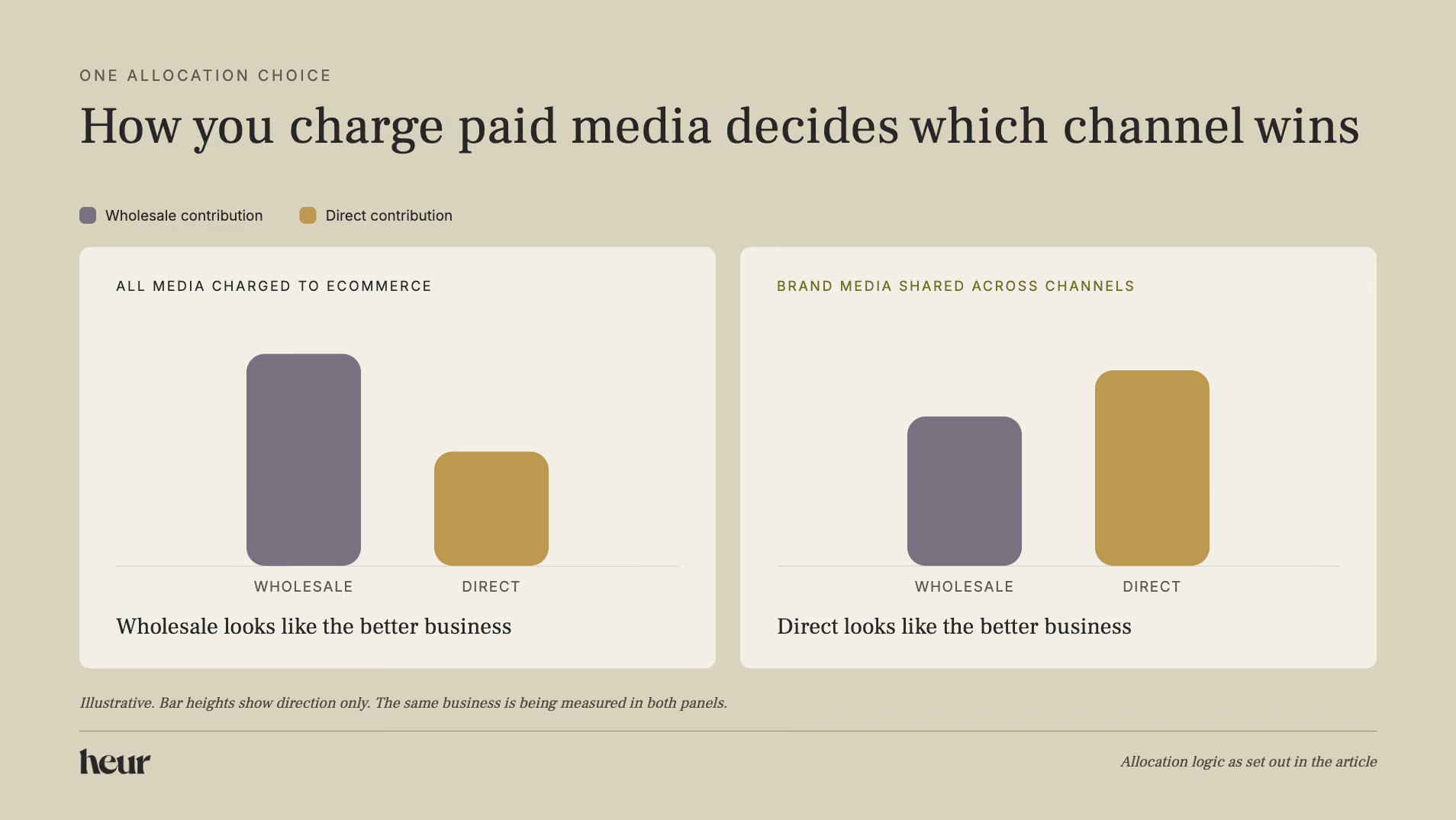
Beyond media, every variable cost gets coded to the channel that caused it, in both directions. Load them all onto ecommerce, leave wholesale sitting at gross margin, and the answer comes back that ecommerce is expensive. Build the split properly first, then argue about what it says.
Why the data favours wholesale over DTC
Because BMO's analysis measures what brands spent, and what brands spent was a choice.
The costs it named as the drag on direct margin were fulfilment, logistics, marketing, technology and returns. Read that list again. Every item on it is an operating decision, and none of them are properties of selling direct.
Nike makes the point at a scale nobody reading this will match. Its own finance chief said the shift to direct delivered over $12 billion in incremental revenue while it also "added complexity and inefficiency", and the company went on to announce up to $2 billion of cost cuts. Ecommerce can be run lean. It can also carry an operating base that swallows the margin it was built to capture. Which one you get is a governance question, and it is yours to answer.
What your wholesale terms cost you after the deal is signed
The trade discount is the part you negotiate. The rest of what wholesale takes out arrives afterwards, and on an account agreed years ago by someone who has since left the business, nobody currently in the building may know what was signed.
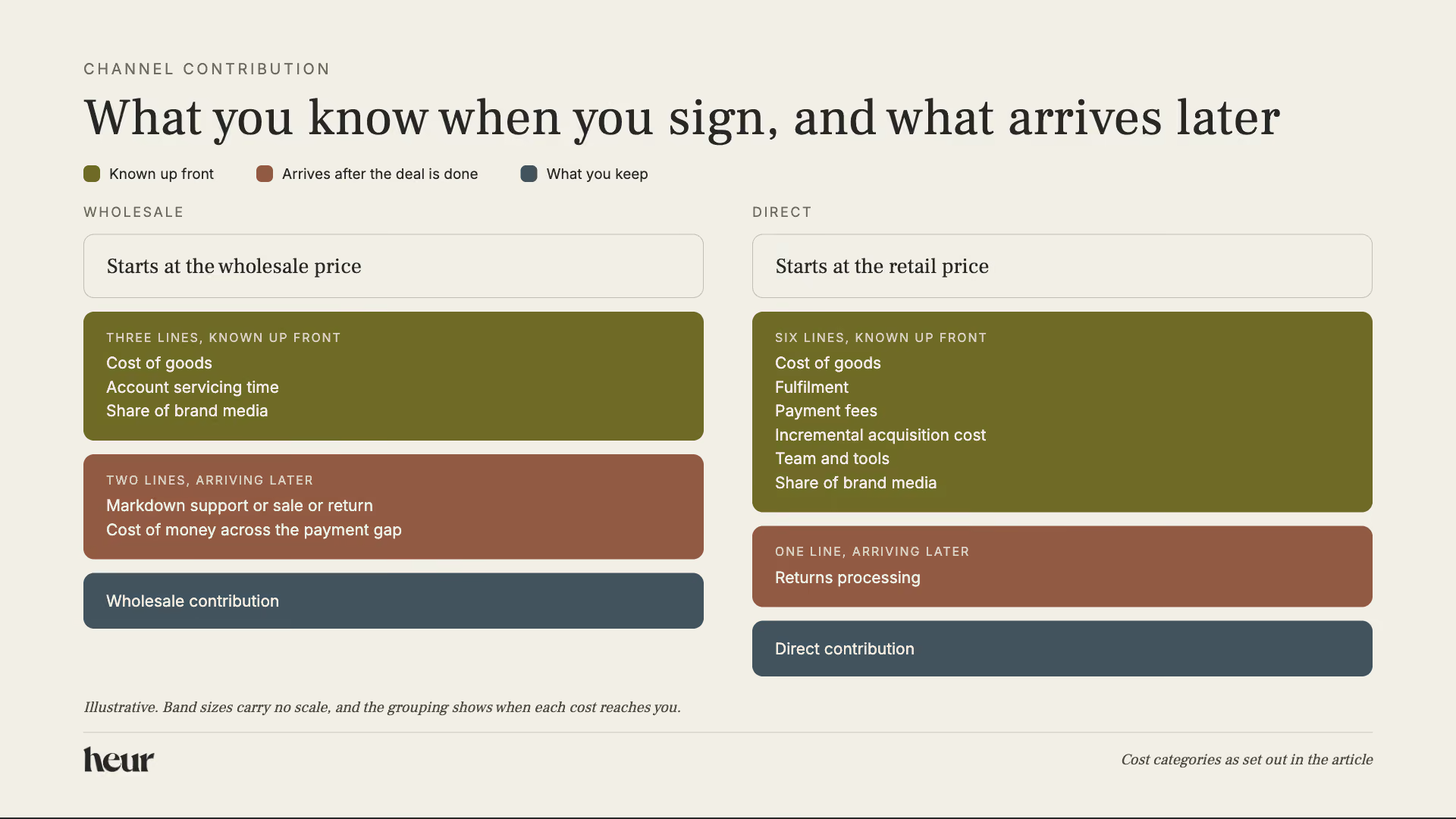
A strong wholesale quarter can be a warehouse filling up somewhere you cannot see, and that stock has to go somewhere eventually.
Go and read your three largest agreements before you model anything. On an account that predates the current team, that hour is the most useful work in this whole exercise.
How wholesale discounting affects your DTC full-price sales
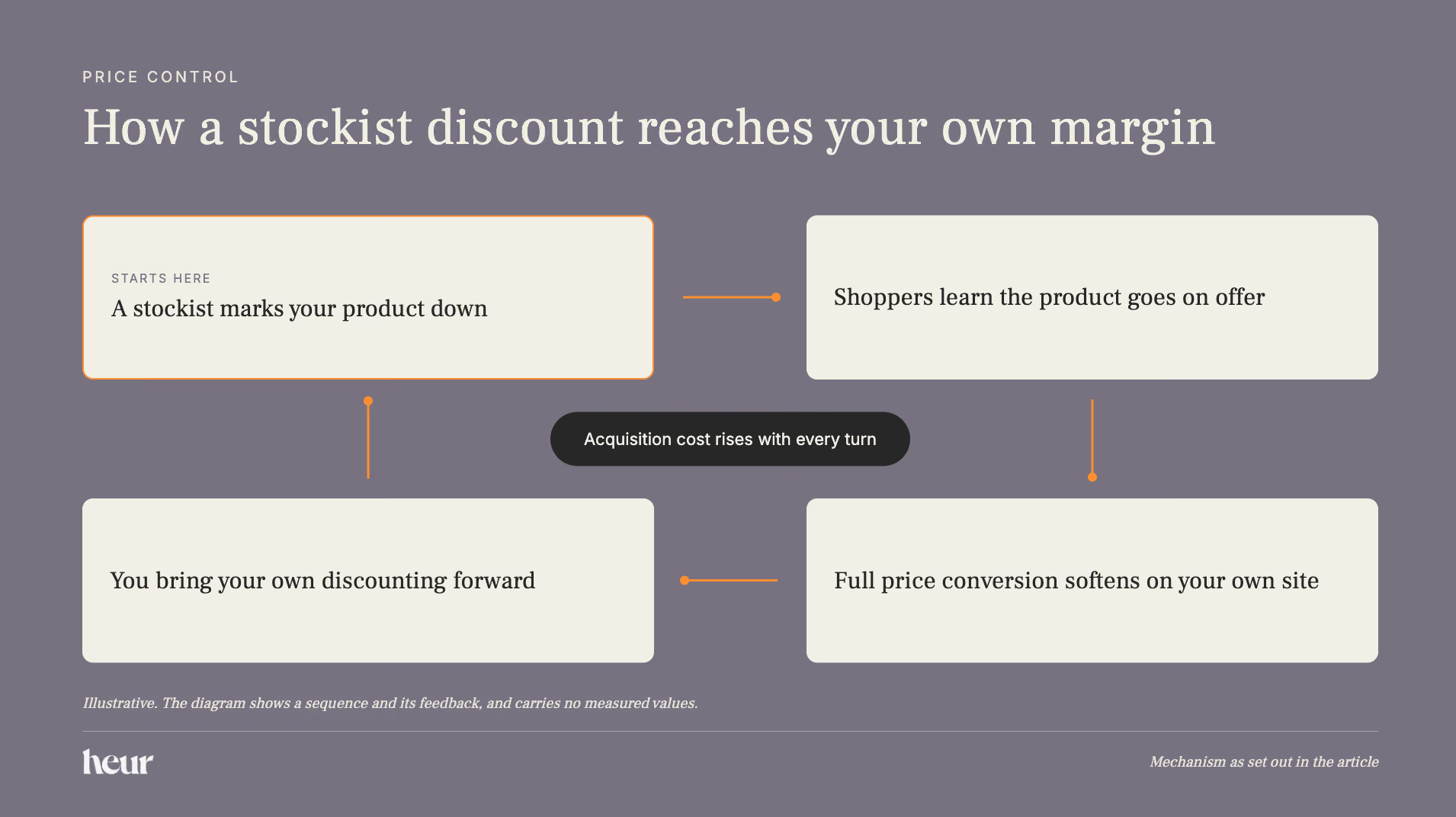
A stockist discounting your product sets the price your own customers will wait for.
Your ecommerce P&L and your wholesale P&L are separate lines in a spreadsheet and one market to the shopper. When a stockist marks your product down in week six, your paid social starts buying clicks from people who have already seen it cheaper. Conversion softens at full price. Your own discounting gets pulled forward to match it, and acquisition cost rises. All of that lands in the DTC column, and its cause sits in a wholesale agreement with no floor written into it.
What can go wrong outside your control
Three things move without asking you, and each one lands in a channel you did not choose.
Stores close. Chain retail across Great Britain lost doors at a pace with no modern precedent: 8,739 closures against 3,488 openings in the first six months of 2021 alone. Department stores and high-street fashion groups went first, taking concession space and wholesale accounts with them. Independents held up better through that stretch than the received story suggests, then came under pressure later as government support was withdrawn. A brand carrying a large share of turnover through accounts it did not control watched that turnover disappear.
Demand softens. Wholesale orders are placed months ahead against a forecast of a season nobody has seen. When the season disappoints, the retailer stops reordering, and your revenue falls without anything changing inside your own business. Your own channel gives you weeks of warning, where wholesale gives you a season.
A partner stops performing. A buyer moves on, a category gets restructured, a chain shifts to own-label in your space. Or nothing changes except the selling: weak placement, a site listing you at the wrong price, photography that undersells the range. The account stays open and the orders stop growing, which is harder to see than a closure because nothing announces it, and it reaches your own conversion rate before it reaches their reorder.
Sometimes the brand does it to itself. Nike cut partners including Urban Outfitters, Dillard's and Zappos, and Foot Locker's Nike allocation was set to fall from 75% to around 55%. Then Nike went back, re-entering DSW and Macy's. Analysts covering the reversal landed on a simple explanation: the shopper wants choice and keeps walking into multi-brand retailers. Closing the doors closed the demand along with them.
Frequently asked questions
Is DTC more profitable than wholesale?
On gross margin, yes, because you keep the retail price. On contribution, the answer is set by how you run it. Published analysis of brands reporting by channel puts wholesale ahead once operating costs land, but those costs are decisions about headcount, tooling and acquisition, none of which are facts about the channel. Split your own contribution properly before accepting the general answer.
What is sale or return in wholesale?
An arrangement where the retailer pays only for what sells and returns the rest to you. It moves inventory risk off the stockist and onto the brand. The stock comes back at the end of the season, worth less than it was and clearable only at a discount, and that cost lands in your margin.
How much of my turnover should come from wholesale?
There is no correct share, but there is a test. Ask what happens to your business if your three largest accounts closed inside a year, because that has happened to brands before. If the answer threatens the company, the concentration is the problem rather than the channel.
How to calculate the margin you recover selling direct
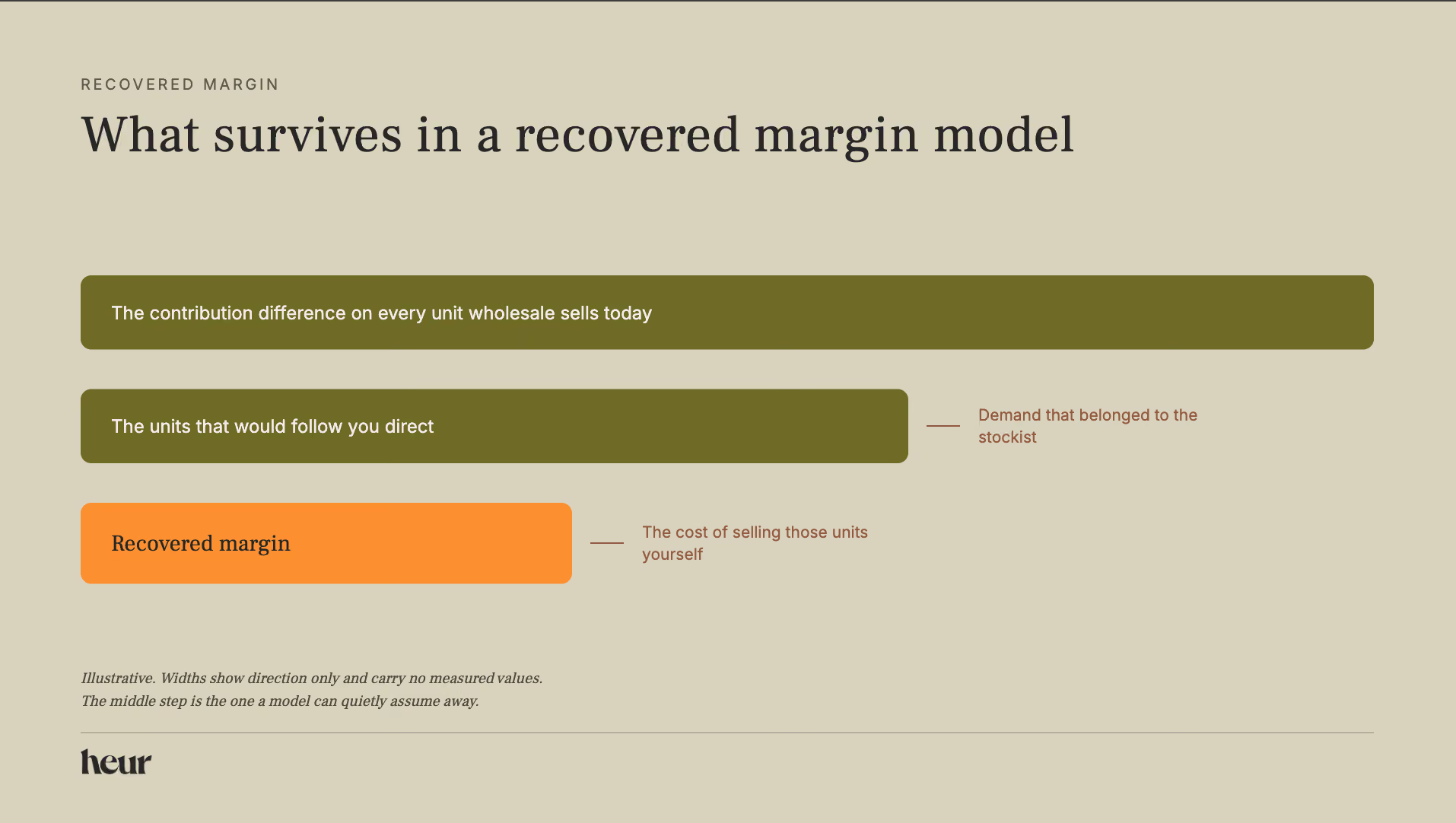
It is the contribution difference on a unit, multiplied by the share of units that will follow you, and the share is the harder of the two to get right.
The difference between those two lines is what one unit is worth if you sell it yourself. Run it on your three largest SKUs before you run it across the range.
Two inputs decide whether the answer means anything: what your next unit costs to sell, and how much of the wholesale demand follows you. Both are worth an hour of work each before you multiply anything.
What your next unit costs to sell. Use incremental acquisition cost, because you are modelling incremental units. A blended figure averages in everyone who was coming to you anyway, so setting it against units you do not yet have mismatches the cost basis and the unit basis. If nobody has measured what your next unit costs to acquire, go and find that number before you build the case on it.
How much of the demand follows you. Nobody moves a wholesale unit onto their own website by deciding to. Part of that demand belonged to the stockist: its footfall, its catalogue, its email list, its buyer's recommendation. Closing the door closes that part with it. Put a defensible number on the share that transfers before you multiply by it, because a recovery model at 100% transfer is a hope with a spreadsheet around it.
One argument cuts the other way and deserves its weight. A shopper who has handled your product in a stockist converts more cheaply than a cold one, so part of the demand you recover arrives pre-warmed by the channel you are recovering it from. That effect exists, and it is the same one that holds your transfer rate below where you assumed it sat. It touches both inputs, as a discount on cost and as a dependency you are choosing to remove.
Recovered margin is the contribution difference, times the units, times the share that follows. That figure is your case for investing in the channel. If it comes back small, you have an answer too, and the work sits in governing wholesale better while the mix stays where it is.
A contribution split cannot see everything wholesale buys. A purchase order is committed demand months before production, so you can cut fabric against confirmed orders. Reach into markets you could not fund yourself arrives with it. On firm terms the inventory risk sits with the retailer and stays off your balance sheet. None of that appears in a per unit contribution figure, which is why this calculation answers the margin question without answering the whole channel question.
How to build your channel mix
No mix is correct for every brand, and four questions will delete the options you never had.
- Are you running paid media at scale? Without it, a direct-led position asks your website to create demand that nothing is creating. Wholesale reach is doing that job whether you have priced it or not.
- Do you have drops coming, or a continuity range? A drop calendar gives you reasons to bring people back and makes direct compounding worth funding. A continuity range with slow replenishment gives you much less to work with.
- Does your category reward availability or scarcity? Availability rewards doors, while scarcity punishes them, because a stockist discounting to clear undoes the positioning you are charging for.
- Can you fund the working capital gap? Direct is paid at checkout, and wholesale funds stock months ahead of settlement, which needs a balance sheet able to carry it.
None of these is the right answer. The point is that your position should be chosen rather than inherited, and whoever signs your next set of terms should know which position they are signing you into.
How to set governance on a wholesale account
Decide what an account is for before you decide what it is worth. Wholesale run on terms you chose is a good business, and the brands that get it right treat distribution with the same seriousness they bring to their own website.
- Split contribution by channel honestly. Every variable cost coded to the channel that caused it, both directions, with brand media shared. This is the number the rest depends on.
- Write a floor on advertised price into the terms. Not a request made after the first markdown. A condition of supply, agreed before the first order.
- Price the terms as hard as you price the discount. Model sale or return, markdown support and payment days into the margin before you agree the wholesale price. A deeper discount on clean terms can be worth more than a shallow one on terms that keep taking.
- Cap what any one account can become. Set the share of turnover above which an account stops being a decision for whoever answers the buyer's email and becomes a decision for the board.
- Ask for sell-through as well as orders. An account that reports what shoppers bought lets you see a problem a season earlier than a reorder does.
- Give every account a job. It reaches a region you cannot serve yourself, or it buys credibility in a category, or it carries the volume that funds a factory minimum. An account with no stated job is just a shop that happens to stock you.
The same discipline runs on your own side of the business. Audit the DTC cost base once a year the way you would audit an account: what is fixed that should be variable, what tooling is duplicated, what headcount is paying for activity nobody can trace to an outcome. Ecommerce becoming expensive is a decision made in small increments and never reviewed, which is why it reads as a property of the channel by the time anyone looks.
Every account needs a plan, and more doors is not a plan. Know what each one is for, what it costs you, and what you will do the week it starts discounting.
If you cannot run that contribution test today, because nobody has ever split the costs by channel honestly, start there. It is a finance job before it is a marketing one, and it is worth doing properly. What comes after is the harder part. A buyer arrives with a large order and terms you would not have written, and someone has to price the order on what it leaves behind rather than on what it adds to the top line. That is usually the point at which brands start talking to us.